




October
2026
When the Truck Can't Get In and No One Can Get Down
1. The Bottleneck in Drainage Is Rarely the Pump Itself
When specifying drainage equipment, the first question is usually how much flow it delivers. Flow matters, of course. But on site, what actually slows a job down tends to be two other things: whether the equipment can get there first, and whether it can keep working in bad conditions. Large drainage vehicles have the power and the flow, yet they demand good roads and firm ground. Compact units are agile but weaker at sustained operation. Rather than chasing the maximum figure on a single machine, it makes more sense to build a combination that covers both large and small sites — and still gets into the places that are hard to reach.
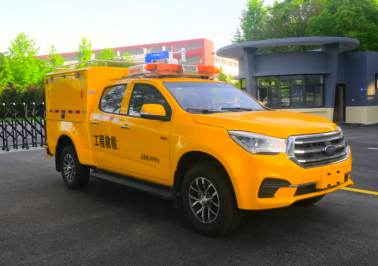
2. Pickup Rescue Drainage Vehicle: One Blue-Plate Truck Is One Drainage Crew
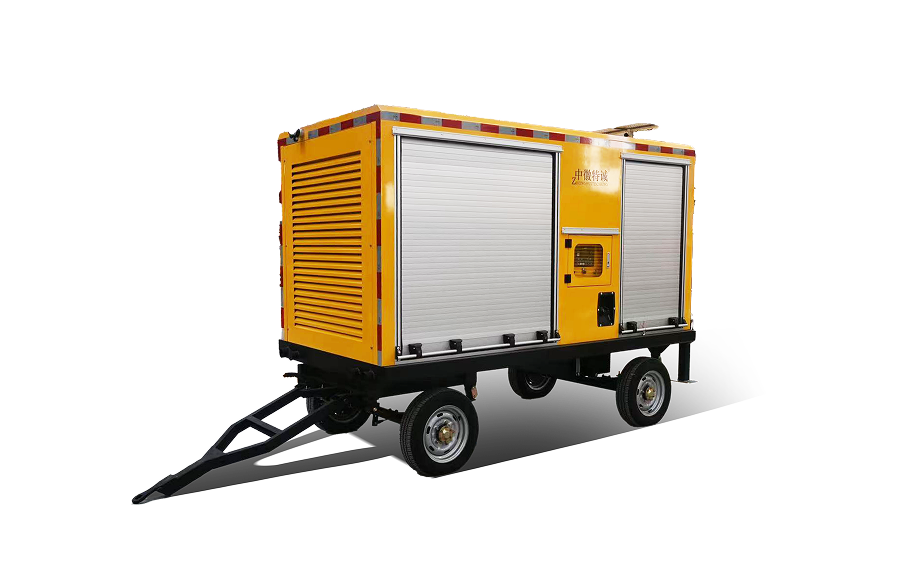
Measuring 5,660 × 1,885 × 2,150 mm with a gross weight of 3,295 kg, the vehicle is eligible for a blue license plate: drivable on a standard licence and unrestricted in urban areas, so narrow lanes and weight-limited roads that stop a heavy yellow-plate truck do not stop this one. On many urban flooding sites, simply getting in is already half the battle. The chassis runs a China VI-B diesel engine rated at 105 kW from 2,999 ml of displacement, with 4×4 drive and seating for 2+3 — dependable traction on wet and flooded surfaces. On board is a 30 kW generator set, three-phase four-wire, rated 400 V ±10%, capable of at least 8 hours of continuous full-load operation: enough for a crew to cover an entire night shift.
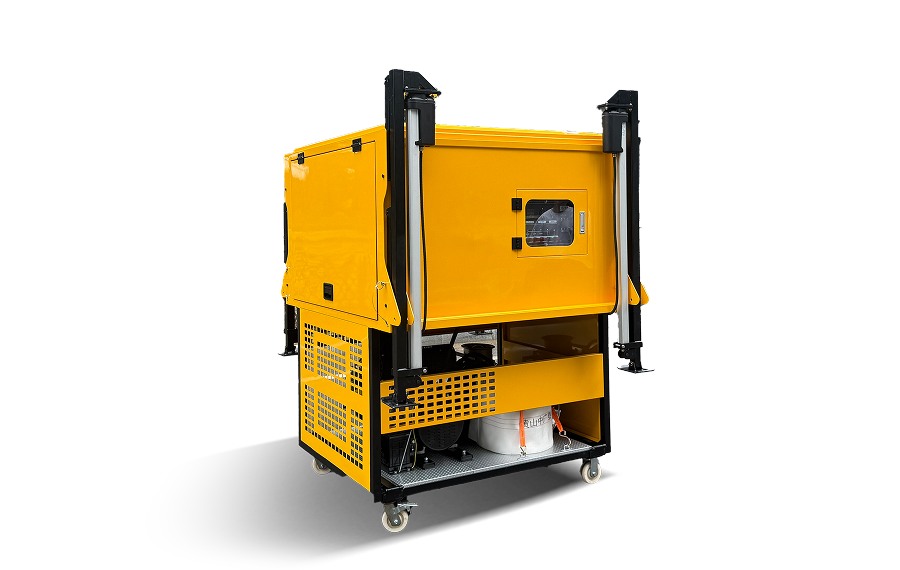
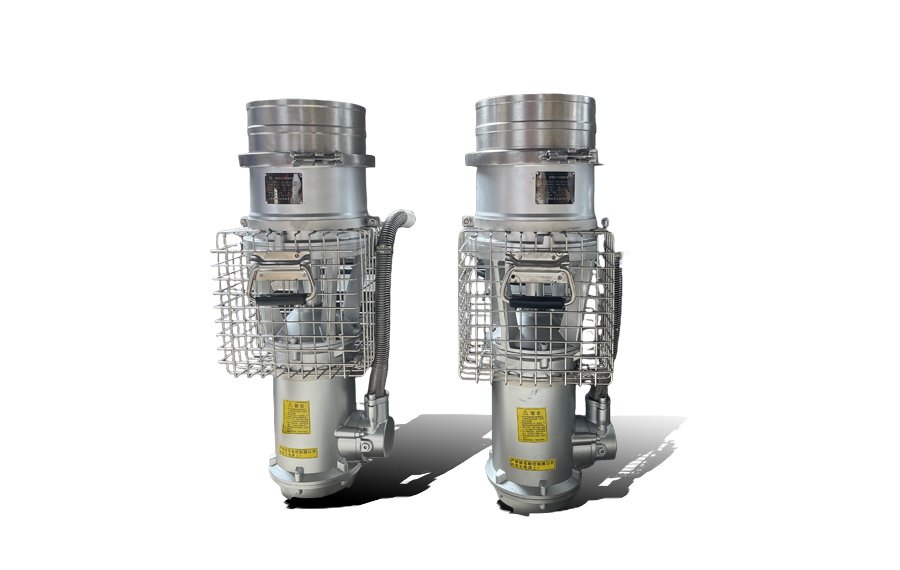
The drainage core is a portable submersible pump. Each unit weighs only 28 kg, with a DN200 outlet, delivering 600 m³/h at 9.6 m of head and 500 m³/h at 11.2 m of head from a 22 kW motor. The pump body is built from aviation-grade lightweight alloy or stainless steel; its dry-type composite motor can run dry without damage, and the one-piece impeller is 304 stainless steel — so silt-laden water is no problem. The variable-frequency control cabinet weighs just 15 kg and is rated IP54, and can be quickly detached from the vehicle to run independently on mains power. It supports remote start, stop and monitoring from a phone app or PC, so no one has to stand next to the pump. Each pump comes with 60 m of DN200 hose rated to 10 kg working pressure, 304 stainless steel quick couplings, and a polyurethane float ring providing at least 50 kg of buoyancy.
The vehicle also combines office, rest, power distribution, drainage, lighting and storage functions in a compact body. A lifting lighting mast rotates 360 degrees horizontally and more than 180 degrees vertically under wireless remote control, handling night-time illumination on its own, and the vehicle can be fitted with demolition tools, welding machines, gas cylinders and other rescue equipment as needed. Chassis options include Foton, Great Wall Poer, Qingling (Isuzu), Maxus, Zhengzhou Nissan and JMC — with customisation available.
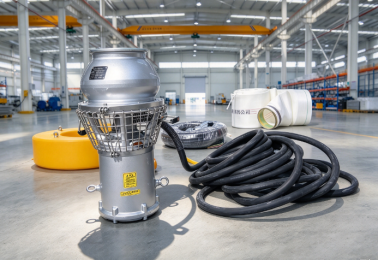
3. Tracked Drainage Robot: 1,000 m³/h, Remote-Controlled, No One Gets Wet
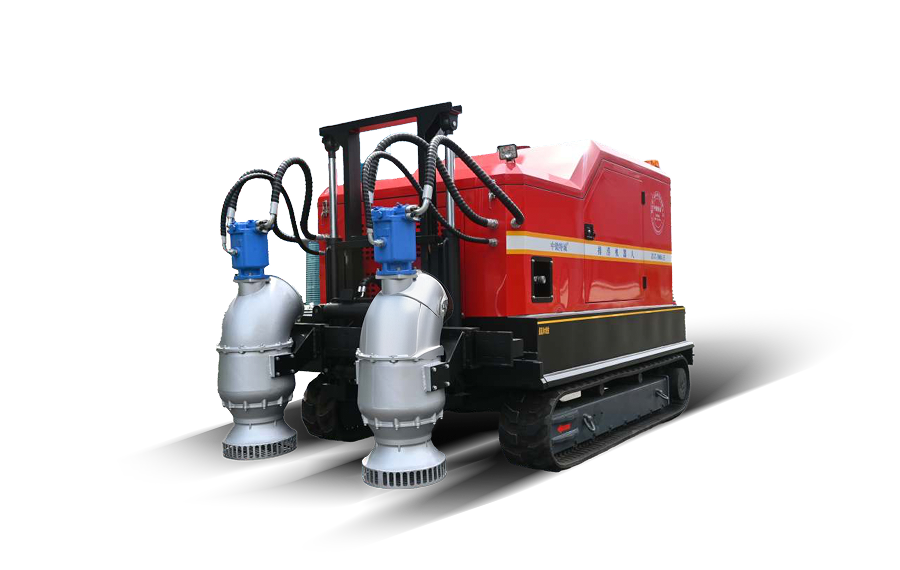
If the pickup solves getting there, the tracked drainage robot solves getting down. Built on a crawler chassis with a hydraulic drainage system and intelligent control, it delivers a total discharge of 1,000 m³/h from a 60 kW rated power unit, with 10 m of head at 1,500 rpm, a total weight of 1,800 kg, dimensions of 1,500 × 1,780 × 2,400 mm and the same DN200 outlet. The value of tracks shows up on difficult ground: muddy farmland, potholed yards, urban rubble and the soft edges of flooded areas — the places where wheeled machines bog down. The robot travels steadily and drives itself right up to the intake point, putting the pump where people cannot walk. With wireless remote control, the operator stands safely while the machine walks and pumps: no wading, no working on the edge of a slope or foundation pit.
Intelligence is built in. A high-definition LCD panel displays water temperature, oil temperature, oil pressure and rpm in real time, along with standby, running and fault status. Control buttons are waterproof and dustproof, and the emergency stop uses a raised red mushroom-head design for an instant cut-off. The enclosure is an integrated skeleton sandwich structure with a 2.0 mm aluminium skin — fireproof, rain-proof, sound-insulated and flame-retardant — finished in fire red with engineering yellow accents and fitted with warning signs and reflective strips.
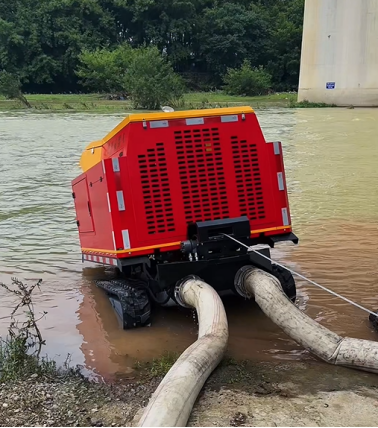
4. How the Two Work Together
The field logic is straightforward. The pickup arrives at the flooding point first and, thanks to blue-plate access, parks right beside the work area: its 30 kW generator set supplies power on the spot, the lighting mast illuminates the site, and the cab doubles as a temporary command and rest space. Where a pump cannot be lowered into position, the drainage robot travels with the vehicle or drives itself in, then works from mud, from the water's edge or from deep standing water at high flow. Small pools of water are cleared by a single pump on the pickup; for large-scale flooding, both units go in at once, and every minute saved inside the pumping window is real loss avoided. One practical detail: both units share the DN200 outlet, so hoses, quick couplings and float rings are fully interchangeable. A single set of spares covers both machines — in the field, either unit can take over.
5. Three Reminders When Specifying Drainage Equipment
Drawing on years of experience in emergency equipment service, Huangshan Zhongguangtai offers three suggestions for drainage operators. First, standardise the connection size: common hoses, couplings and float rings let equipment be linked flexibly on site, avoiding the classic problem of having a pump but no hose. Second, plan for dual power: the diesel generator and the mains supply should both be able to drive the pumps, and the control cabinet is best detachable and capable of standalone operation, so that a single fault does not stop the whole job. Third, judge remote control by practical value: remote range, cabinet weight, whether each pump is controlled independently, and whether monitoring works from a phone — these details decide how many people the job really needs. The company supports custom builds with a 72-hour response, tailors equipment packages to a site-by-site list, and backs them with a seven-star after-sales service system. To date it has supplied more than 500 government and enterprise clients across the municipal, water conservancy, flood control and firefighting sectors.
Drainage is never decided by the spec sheet of a single machine. It comes down to whether the whole package can arrive, can work, and can hold. Huangshan Zhongguangtai stands ready to work alongside municipal, water conservancy and emergency departments to guard every low-lying point in the city with a combination that genuinely gets in and gets down.

